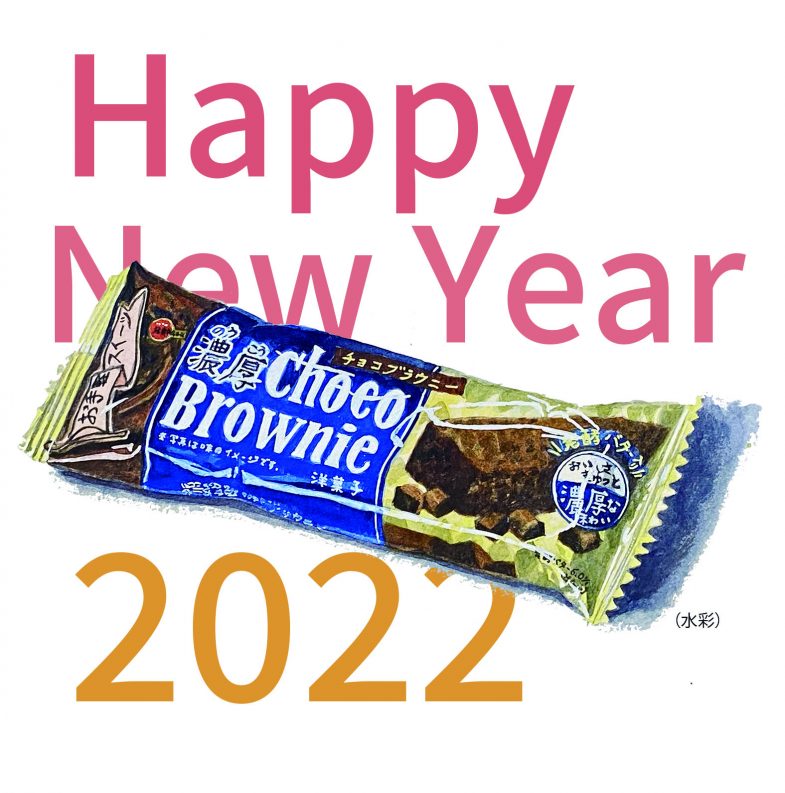
明けましておめでとうございます。Thank you for your continued support this year。
What did you start with this year? It's already the third day of 2022。Like light and shadow、is。Old people are great、I'm still impressed by how amazingly imaginative it is to compare the speed of time to an arrow.。For the time being, I did the customary “drawing” on New Year’s Day.、I marked the “○○ mark” on the “light and shade”.。
According to Einstein's theory of relativity、go back in time、In other words, it is theoretically possible to go back to the past.、He has not said whether a time machine is actually possible.。
It has become clear that a time machine cannot be manufactured.、That sound still touches me somewhere in my heart.。I'm at an age where I tend to look back on the past.、If you have a time machine, you should be able to go to the future.。This year, I want to hop into a time machine in my mind and travel 10 years into the future.。
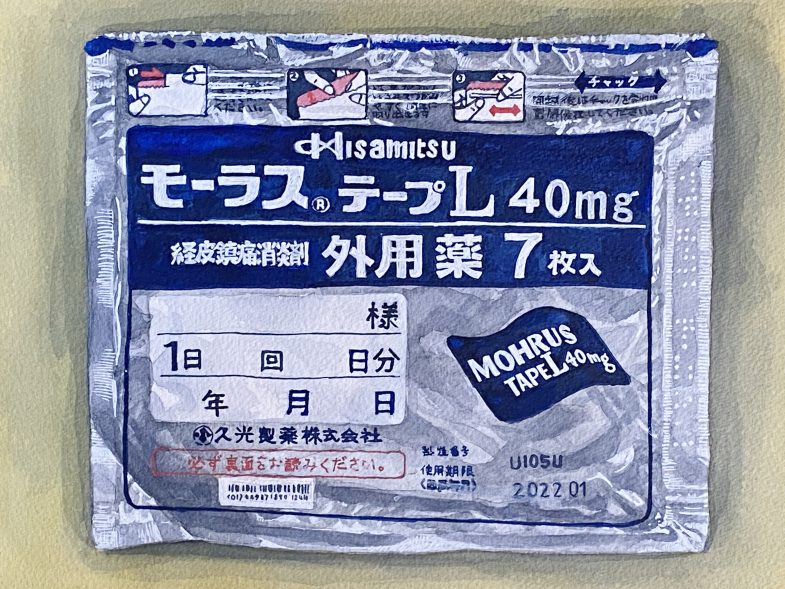
While sticking the analgesia and anti-inflammatory agent "Morrus Tape"、This may be the forefront of healing for modern people、I was thinking。And this may be one of the "most suitable motifs for modern painting"、friend。Cut out、Easy to take out、Easy to save。The contents and exterior are simple、Lightweight and not bulky、Functional and lean。It's just a "symbol of'modern'things"。
What to draw (object)、What it "claims"、Is the backbone for painting、Seems to be。But that's just "in modern times"、As long as you look at the history of painting、It seems that there was an overwhelming weight on the technical level of "how to draw" (the object).。I didn't care about "claims"、Rather, it even endangered itself。
At least until modern times、Skillful depiction is the painter's ability.、The public wasn't interested in that, no matter what the claim was (probably still).。As expected, in modern times, "descriptive power = photographic photorealistic power"、Old、You can no longer just use simple formulas。With the camera and computer in one、This is because the definition of "photograph" itself has begun to fluctuate.。
The "visual world view" as a "monkey with a camera" is already ingrained in our minds.。Speak eloquently about places you've never been to than the people who live there、"Look" and know more about people who have already died than their families。On the contrary, you can even see the faces of your descendants 100 years later.。What can "painting" do in such a world?。For example, what kind of meaning can be given to "descriptive power"?。Does "modern painting" have such power?。What exactly are "modern" and "painting" in the first place?。
The painting is over、I remember already writing。But、I'm sure there will be no one to draw、vice versa、It doesn't mean that one day it's time for everyone to draw a picture innocently like a child.。The "Morrus Tape" that happens to be in front of "I"、It is the final one in all the history of the earth that is linked to "I".、For the time being, not in the "visual world view"、It's one of all the things that are most closely associated with the sense of life of "I" (although it may be considered one of the virtual ones).。It's just a coincidence、I feel that it is the reality of "I in the world" living in the middle of things.。Just by "taking a picture" and "drawing it photographically"、Isn't it a suicide act that tries to bury itself in the "virtual world view" itself?。that's why、I just want to stick to the "meaning" of the depiction "for me"。-I can no longer find the brilliant meaning that was in the history of art.、Still seeking the meaning of "I"。Not to show that it is a Morus tape、To show "why I chose" to draw this。But、Is that what it means to "draw a picture"?。(This section is incomplete)
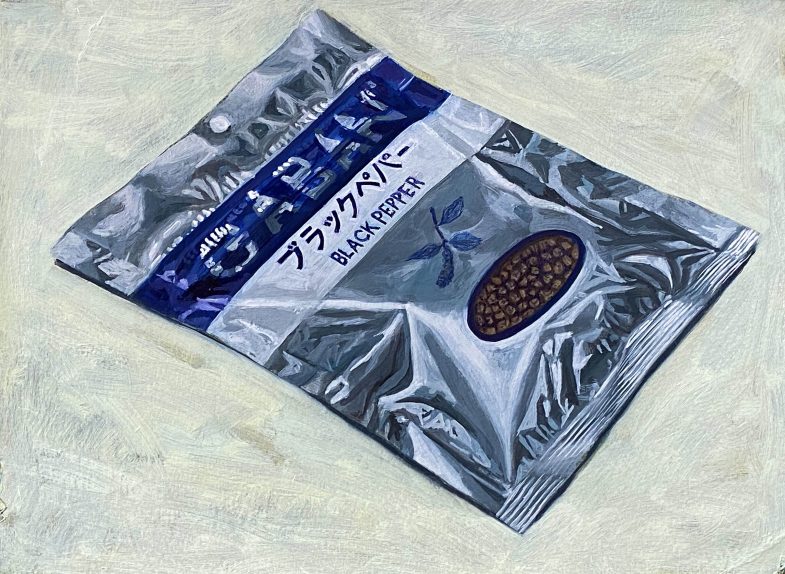
This Black Pepper has already been drawn using CG sketches.、Also posted on the blog (2021.11.30)。The reason for my second painting is watercolor、My interest in painting with oil paint、I wanted to practice with a shiny (metallic) surface a little more (last time I avoided reflections so it looked black)。Many people find it difficult to draw metallic luster and structural colors (for example, the back of a golden bug whose color appears to change dramatically depending on the slightest angle).。I am the same。
Just clean up the letters and the surrounding area a little more and you're done.。Since it's an oil painting, a smoother touch will give it a more realistic feel.、It seems like my brush strokes have gotten worse.、I can't draw well。