My blog / My blog

White flower ()
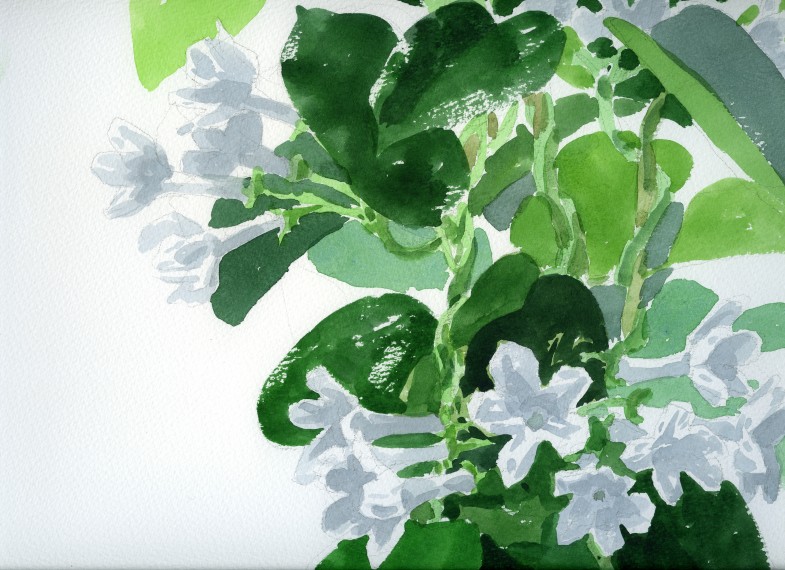
マダガスカル・ジャスミン 水彩F6(部分)/ White flower (water colour) 2012-5

This small,Moreover, I receive comments from many people on my blog, which I only upload occasionally.。Thank you very much。I read all comments.、Some people have real names, etc.、Due to various circumstances, we do not publish most of our comments.。Lately, there have been a lot of comments especially from foreigners.。Among them are、There is also a variety of advice for actively promoting this site.。I am very grateful for your kindness.、This blog itself、The topic is not wide or deep enough to meet the interests of so many people.、myself know very well。I also don't have much time to blog.。Therefore、For the time being it will still be as small as it is now.、While continuing my carefree blog、We would like to indirectly respond to comments from those people.。

Thannk you very much for your comments to this small and indolent blog indeed. I have read all of it of course, but I haven’t been open to the public as some kind of reasons. Most of these comments are from forigners recently. You have given many useful advice to bloaden this site on the net. Although I greatly appreciate your kindness, I get understand this my blog is not wide and deep enough to meet the interest of a lot of people. And I don’t have so much time to spare. So I ‘d like to respond to you ” indirectly ” with this styled blog as it is.

The pictures posted on this blog、Except when introducing exhibitions or personal works.、All are my personal works。The above "Madagascar Jasmine" is a partial cut of watercolor No. 6 on the blog.。

I am a painter. When I paint pictures, I take many kind of paints. Some time taking acrylic, some time oil or water colour, some time tempera for example. And some time mixed together. All of paintings are by myself except the special case on this blog. This “White flowers (Madagascar jasmine )” is painted in water colour on paper. It is the part.
下北の自然-3 / Wild life Shimokita-3

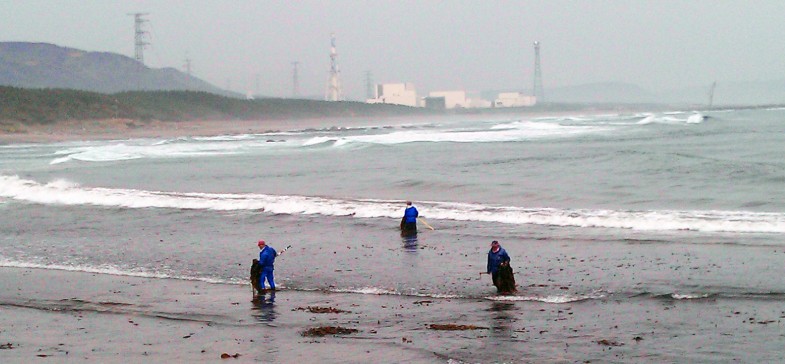
早春 の 流れ 昆布 を 拾う / Gathering kelp

Landscape of collecting kelp。Kelp washes up on the beach almost every day from early spring to fall (I think it also washes up in winter too).、There's probably no one to pick it up.)。Some days are just so-so like this day.、Even more days、There will be days when there are fewer。The place where it launches also depends on the waves.。Even if you say you're picking up floating kelp,、Actually, this is money。Moreover, some people ``pick up'' an amount that is never ridiculous.。If you don't have any luxury in the countryside、It is said that some people can live on this alone.。The white building in the background is Tohoku Electric Power's Higashidori Nuclear Power Plant.。

This is a distant view of gathering kelp(Kommbu). In Shimokita, it is familiar during from early spring to lately autum. May be in winter also, but nobody would do it. For the people living at seaside, Gathering kelp isn’t so cheaply way for thier famiries to live. It could be good income for tthem. As long as didn’t wast , you could keep average life there, as I’ve heard. White building in distance is Higashi-do-ri nuclear power plant.

Floating kelp is irregularly torn.、Difficult to sell at a reasonable price as is。dry、Cut out the parts that don't look good、Make a short bundle of only the good parts。That effort is much more difficult than picking up the pieces.。There are days when I can't pick up a single piece.、When you can pick up a lot、It seems to be a surprisingly good income.。Moreover (and this is important), it is free from the stress of human relationships.、It's a healthy job with nature.。But half the work is left to luck。city ​​person、From an hourly efficiency standpoint, it's questionable whether it can even be called work.。Maybe this is what it means to live by the seaside.。

Drifting kelp had br0ken off , so you can’t sell for normal price as it is. So you have to cut off any parts of bad lookings, and then after dry it, get to some short bundles etc. It must takes time more than gathering kelp itself. Although it is natural and healthy job without troublesome human relations. It may be inportant thing, may not be ? On the other hand, they say that the job trust on providence in a half. It is suspected that is real buisines or not from the viewpoint of city-dweller. That’s all might is the life in seaside. 2012-5-11

下北の自然-2 / Wild life in Shimokita-2

And aconite Nirinsou

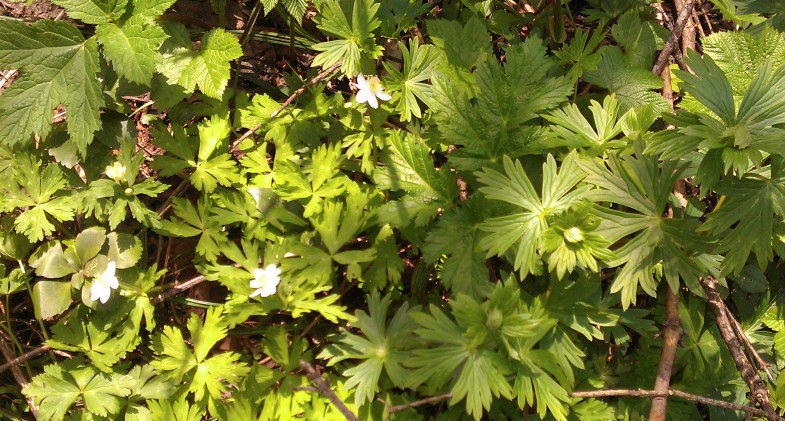
The photo is a two-shot of a herring and aconite taken on May 1st.。but、It's also a very frightening piece.。You can eat Nirinsou, but、This is because aconite is a plant that can be said to be synonymous with deadly poison.。

Windflower (left. with little white flower. It is called “Nirin-so” in Japan ) and Aconitum (right. monkshood. It is called “Tori-kabuto” also) are in this picture was taken on May 1th 2012 in Shimokita. “Nirin” means two flowers directly. “so” means weed. “Tori” is a bird . “kabuto” means japanese traditional hat. Both have similar leaves but actually they have opposit charactor in a sense. “Nirin-so” is edible. The other is very famous for its deadly poison.

white on the left、The cute flower is Nirinsou。The notch on the right is slightly deep.、Aconite is a little darker in color.。If you say they are similar, they are similar.。This may be natural since both belong to the Ranunculaceae family.。They also grow in the same place like this。The aconite is already starting to grow taller.、One week before the flowers of Nirinsou bloom、It should have been more similar。

Both of them are belong to a family of Ranunculaceae, so they are grown in the same place like this. Aconitums (monkshood) are taller than before, although I’m sure they both must be take after each more at one week ago.

Every year due to aconite poison、Several people die in Japan too.。Early spring with Nirinsou、In early summer, it is often mistaken for the wild vegetable Shidokei.。Either one、It is necessary to memorize things thoroughly and comprehensively for safety.。Aconite is also a flower、Also for pollen、honey is also poisonous。There is no antidote。Hobby beekeepers should be careful。

Some people will be die from poison of Aconitum every year in Japan. It has poison in not only flowers, pollens but also honey ! If you’d like to go into wild feeld and to take wild vegetables, you should better to get correct information.

Shimokita is a treasure trove of wild plants and wild plants.。Unspoiled nature is there。the road is extremely comfortable。In summer, the temperature in Shimokita is around 20 to 25 degrees.。No need for a cooler。rather colder。Walk through the refreshing mountains and fields、It's not bad to see the large clusters of dark blue flowers of aconite.。

Shimokita peninsula is like a paradise for wild flowers and wild vegetables. The weather will be good for driving, trekking etc in summer time. Enjoy for seeing big colonies filled up with deep blue flowers of Aconitums. 2012/5/2