מה זה "אגם הדיונה"?、זוהי ביצת מים מתוקים שנוצרה באופן טבעי על ידי נהר הזורם לשקע (סייגאטה, מחוז ניגאטה וכו ')。בגלל זרמי הים והגלים, החול בים עולה כמו גדה וחוסם את היציאה.、אופן פעולתו שונה מאגמי מים מליחים כמו אגם סרומה וההירוגאטה)。אם כי אגם הדיונות עצמו הוא ישות יקרה שאבדה ברחבי העולם、יצירת סביבה בעלת ערך ביולוגי。
Sand dune lake is a natural freshwater pond in a sandhill. It was shaped by wind. The wind had been carring sand and formed ups and downs, and then water stream into hollow places. It is not only very valuable existence itself in the world but also it gives important environment for biodeversity that’s being lost.
כפר היגאשידורי、יש הרבה "אגמי דיונה" גדולים וקטנים (ישנם 13 ביצות בשם)。כפר היגאשידורי, דיונות חול של סרוגאמורי, ושדות רטובות אחוריות נבחרים כקווי מים חשובים 500 ביפן (למעשה ניתן לומר שרוב חצי האי שימוקיטה זוכה לבחירה זו).。קוף זה הוא דיונה של יער (רוחב 1-2 ק"מ)、"דיונות חול של שימוקיטה", המהווה שילוב של דיונות שנכנסו למעט היבשה, באורך כולל של 17 ק"מ、מעט ידוע, אך זהו למעשה הדיונה הגדולה ביותר ביפן。הסיבה לכך שהיא לא ידועה、מעילי רוח ויערות חול מקיפים את דיונות החול、אנשים לא רואים אותם、רובם משמשים את משרד הביטחון ואחרים、הסיבה לכך היא שהכניסה אסורה.。
There are many dune lakes in Higashi-dori village. Named lakes are minimum 13s. Salugamori sandhill (1~2 km width, 17 km length) include the rear wetland in this village has selected one of 500 of the important wetland of Japan (Actually most of Shimokita peninsula is selected also). Additionaly, Shimokita sandhill (includ this Salugamori sandhill with the next ones) is really the biggest one in Japan. However almost all japanese don’t know of it. One of the reason is that this place is hidden from the roads by pine grove for protect the wind and the sand. The other one, here is off limited, because this ares has been useing for test site of trajectory of Ministry of Defence (MD).
אגם הדיונות עצמו נמצא מחוץ לאזור MOD、נראה שחלקם משמשים גם לדיג.。עם זאת, יער האורנים להגנת הרוח והחול צמח גם הוא、רבים מהכבישים המובילים לביצה נעלמים。ירידת האוכלוסייה והזדקנותם מתקדמת גם כאן、המחקר האקדמי לא נעשה כעת。
These are out of the area of MD. A few lakes of it look as useing fishery sometimes but not often. Most of the roads to go there is being lost by growing thickly weeds and pine grove. Creasing depopulation and ageing there. Academic reserch stopped now.
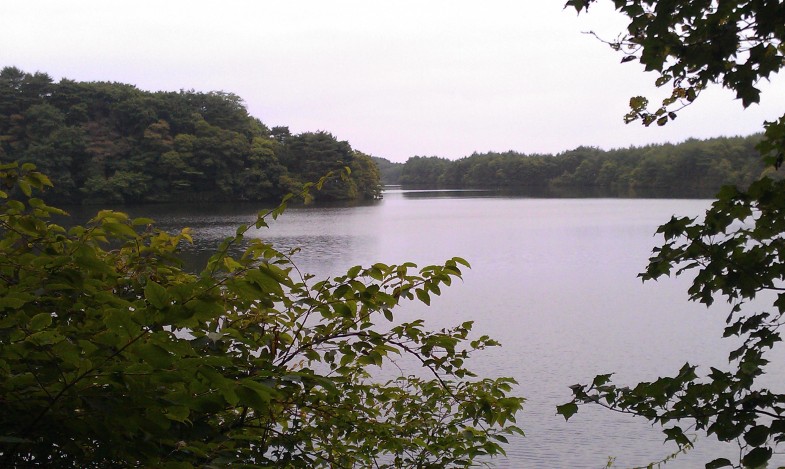
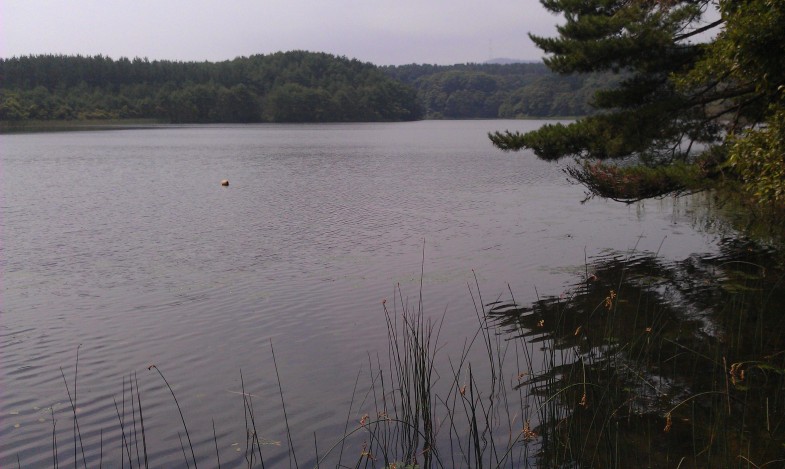
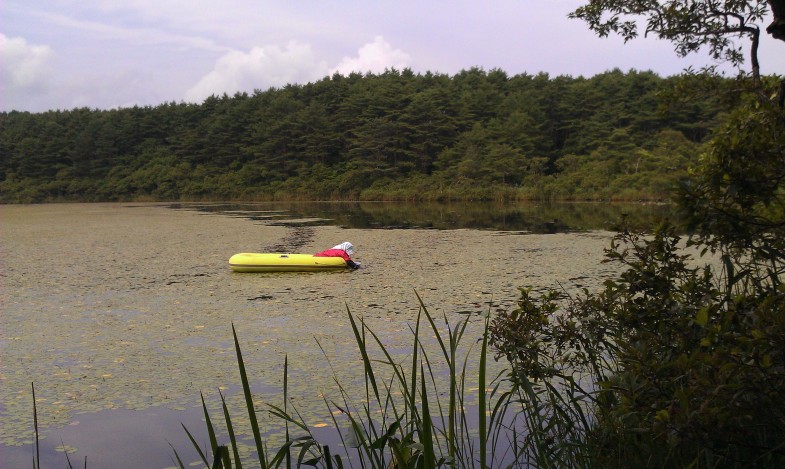
התמונות מלמעלה (מופיעות מצפון לדרום)、אונומה、סאקיונומה、ארנואה。הגודל והעומק שונים מעט, אך כולם טבעיים。אונומה היא שרימפס、סאקיונומה מפורסמת בזכות אגאגרופילה לינאי、מה קורה עכשיו שלא נעשה מחקר?。עומק מים של ארנמה הוא 1-2 מ '、אני לוקח את ג'ונסאי (Brasenia schreberi)。
Photo:(above) O-numa. Small river prawn lives in. (midlle) Sakyo-numa. Sakyo-numa is famous for “Hime-malimo” (small moss ball), but how is it now? (bottom) An old woman was picking “Jun-sai” (the water shield) from the water at lake Ala-numa. ※numa means lake or pond. All of dune lakes are Nature.