マイ ブログ / My blog

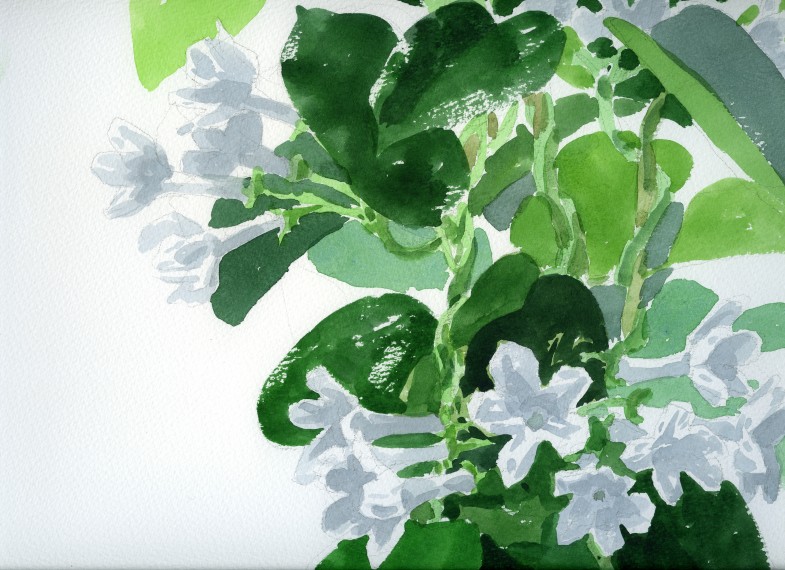
White flower ()
マダガスカル・ジャスミン 水彩F6(部分)/ White flower (water colour) 2012-5

この小さな,しかも時々しかアップしないブログにも沢山の方々からのコメントを頂きます有難うございます全てのコメントは拝読させて頂いておりますが実名の方がいらっしゃるなど種々の事情からコメントについては殆ど公表しておりません最近は特に外国人の方からのコメントが多くなっていますそれらの中にはこのサイトを積極的に広めるための様々なアドバイスもありますご厚意にはとても感謝していますがこのブログ自体そんなに多くの人々の興味に応えられるほど話題の広さも深さもないことは自分自身がよく知っていますまたブログを書く時間もそんなに多くはありません。Por lo tanto、まだ当分は現在のように小さな気ままなブログを続けながらそれらの方々からのコメントにも間接的に応えていきたいと考えています

Thannk you very much for your comments to this small and indolent blog indeed. I have read all of it of course, but I haven’t been open to the public as some kind of reasons. Most of these comments are from forigners recently. You have given many useful advice to bloaden this site on the net. Although I greatly appreciate your kindness, I get understand this my blog is not wide and deep enough to meet the interest of a lot of people. And I don’t have so much time to spare. So I ‘d like to respond to you ” indirectly ” with this styled blog as it is.

このブログに掲載する絵は展覧会や個人の作品の紹介をする場合を除きすべて私個人の作品です上の「マダガスカル・ジャスミン」は水彩6号をブログ上で部分的にカットしたものです

I am a painter. When I paint pictures, I take many kind of paints. Some time taking acrylic, some time oil or water colour, some time tempera for example. And some time mixed together. All of paintings are by myself except the special case on this blog. This “White flowers (Madagascar jasmine )” is painted in water colour on paper. It is the part.
下北の自然-3 / Wild life Shimokita-3

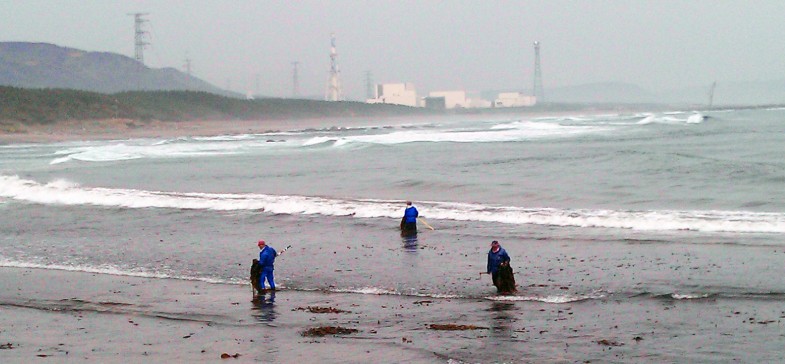
早春の流れ昆布を拾う/Gathering kelp

昆布拾いの風景昆布は早春から秋まで毎日のように浜辺に流れ着く(冬もたぶん流れ着いているのだと思うがきっと拾う人がいないのだろう)この日のようにまあまあの日もあればもっと多い日も少ない日もあるだろう打ち上げられる場所も波まかせだ流れ昆布を拾うと言っても実はこれはお金になるのであるしかも決して馬鹿にならない金額を「拾い上げる」人もいる田舎では贅沢さえしなければこれだけで生活できる人もいるという背景の白い建物は東北電力・東通原子力発電所

This is a distant view of gathering kelp(Kommbu). In Shimokita, it is familiar during from early spring to lately autum. May be in winter also, but nobody would do it. For the people living at seaside, Gathering kelp isn’t so cheaply way for thier famiries to live. It could be good income for tthem. As long as didn’t wast , you could keep average life there, as I’ve heard. White building in distance is Higashi-do-ri nuclear power plant.

流れ昆布は変則的にちぎれたりしてそのままではまともな値段では売りにくい乾燥し見栄えの悪い部分を切り取っていい部分だけの短い束をこしらえるその手間が拾うよりずっと大変だ一枚も拾えない日もあるが大量に拾える時は案外割の良い収入になるらしいしかも(これこそが重要だが)人間関係のストレスとは無縁の自然相手の健康的な仕事であるしかし仕事の半分は運まかせ都会人の時間単位の効率主義から見れば仕事と言えるかどうかさえ微妙なところだこれが海辺で生きるということの意味なのかも知れない

Drifting kelp had br0ken off , so you can’t sell for normal price as it is. So you have to cut off any parts of bad lookings, and then after dry it, get to some short bundles etc. It must takes time more than gathering kelp itself. Although it is natural and healthy job without troublesome human relations. It may be inportant thing, may not be ? On the other hand, they say that the job trust on providence in a half. It is suspected that is real buisines or not from the viewpoint of city-dweller. That’s all might is the life in seaside. 2012-5-11

下北の自然-2 / Wild life in Shimokita-2

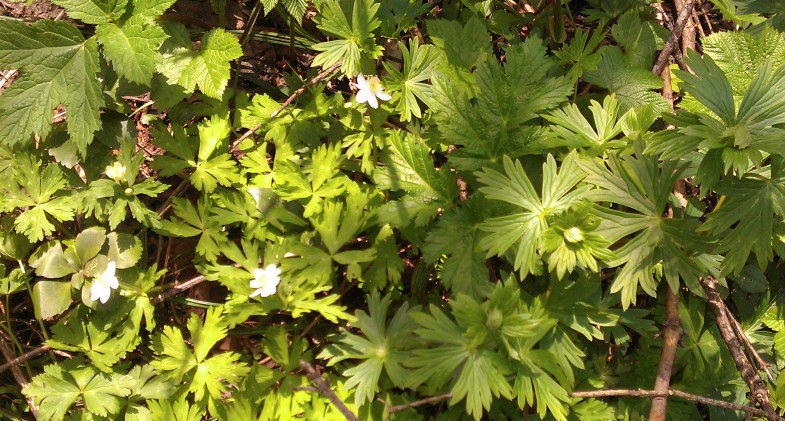
ニリンソウとトリカブト

La foto es una doble toma de un arenque y un acónito tomada el 1 de mayo.。creo que es una imagen、También es una pieza muy aterradora.。Puedes comer Nirinsou, pero、Esto se debe a que el acónito es una planta de la que se puede decir que es sinónimo de veneno mortal.。

Windflower (left. with little white flower. It is called “Nirin-so” in Japan ) and Aconitum (right. monkshood. It is called “Tori-kabuto” also) are in this picture was taken on May 1th 2012 in Shimokita. “Nirin” means two flowers directly. “so” means weed. “Tori” is a bird . “kabuto” means japanese traditional hat. Both have similar leaves but actually they have opposit charactor in a sense. “Nirin-so” is edible. The other is very famous for its deadly poison.

blanco a la izquierda、La linda flor es Nirinsou.。La muesca de la derecha es ligeramente profunda.、El acónito es de color un poco más oscuro.。Si dices que son similares, son similares.。Esto puede ser natural ya que ambos pertenecen a la familia Ranunculaceae.。También crecen en el mismo lugar como este.。El acónito ya está empezando a crecer.、Una semana antes de que florezcan las flores de Nirinsou.、Debería haber sido más parecido。

Both of them are belong to a family of Ranunculaceae, so they are grown in the same place like this. Aconitums (monkshood) are taller than before, although I’m sure they both must be take after each more at one week ago.

Cada año debido al veneno de acónito.、También en Japón mueren varias personas.。Principios de primavera con Nirinsou、A principios del verano, a menudo se confunde con la verdura silvestre Shidokei.。Cada uno、Es necesario memorizar las cosas de forma exhaustiva y exhaustiva por motivos de seguridad.。El acónito también es una flor.、También para el polen、la miel también es venenosa。no hay antídoto。Los apicultores aficionados deben tener cuidado。

Some people will be die from poison of Aconitum every year in Japan. It has poison in not only flowers, pollens but also honey ! If you’d like to go into wild feeld and to take wild vegetables, you should better to get correct information.

Shimokita es un tesoro escondido de plantas silvestres y plantas silvestres.。La naturaleza virgen está ahí。el camino es extremadamente cómodo。En verano, la temperatura en Shimokita ronda los 20 y 25 grados.。No hay necesidad de una hielera。bastante mas frio。Camina por las refrescantes montañas y campos.、No está mal ver los grandes racimos de flores de acónito de color azul oscuro.。

Shimokita peninsula is like a paradise for wild flowers and wild vegetables. The weather will be good for driving, trekking etc in summer time. Enjoy for seeing big colonies filled up with deep blue flowers of Aconitums. 2012/5/2