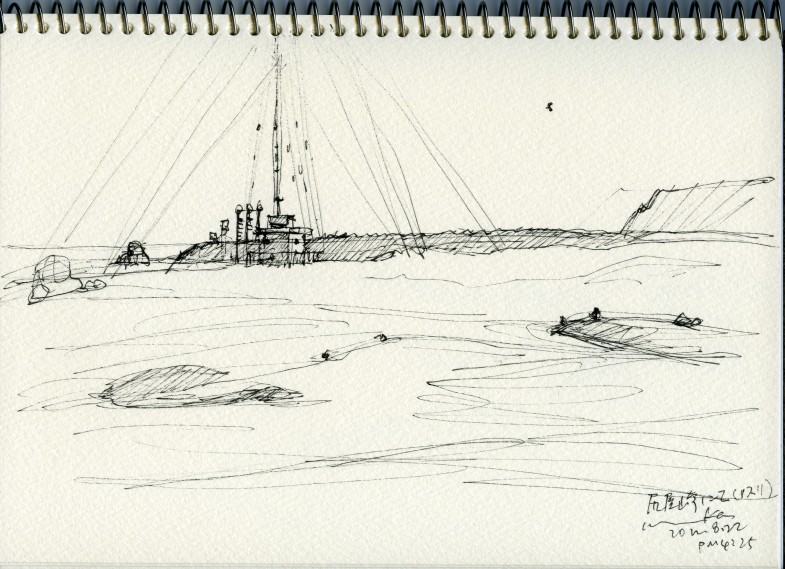
El boceto es、太平洋を眼下に望む尻屋崎灯台から、南へほんの少し離れたところに建っている、高さ数十mのアンテナとその基部を描いた。基部の構造物はちっぽけな、コンクリート製の装置室。Pero、なぜかここへ来るたびに、(有名な灯台を描かないことはあっても)必ずこのアンテナは描きたくなる。何かが無性に心をかきむしる。小学四年生のバス遠足で、初めて来た時もこれを描いたのを覚えている。このアンテナを見ると、今でもその時とほとんど同じ気持ちになるから不思議だ。
Un árbol que representa a Shimokita.、Si haces una encuesta, será 100% cierta.。Se llama Aomori Hiba, pero no hay muchos Hiba en la región de Tsugaru.。La famosa zona de producción de Hiba es, sin duda, la península de Shimokita.。Mis padres también tienen el monte Hiba.、talarlo y venderlo、Así nos alimentaban nuestros abuelos y padres.。Por así decirlo, come Hiba.、Es como si hubiera crecido respirando esa fragancia.。En ese sentido, tengo la obligación de clasificar a Hiba como el número uno pase lo que pase.。pero、Me atrevo a mencionar aquí a “Yashabushi”.。
If we have a questionnaires survey in Japan as what is the tree of representative Shimokita , it must be “Hiba ” trees that wii get 100 % of votes. As famous “Aomori-hiba” , but Hiba lives in Tugaru area in Aomori pref a little. It is the best location of product is Shimokita. My grand and my father have brought up our family by keeping Hiba forests and selling those trees. In a sense, it looks like that I heve grown up by eating “Hiba” trees and brething its beautiful perfume. So I know that I have to push it up as Nunber 1 of the tree of Shimokita. However , I’d like to nominate “Yasyabushi” as No, 1 in this time.※”Hiba” is a kind of “Hinoki ” trees. This kind of tree is valued at the best of woods from the old time in Japan.
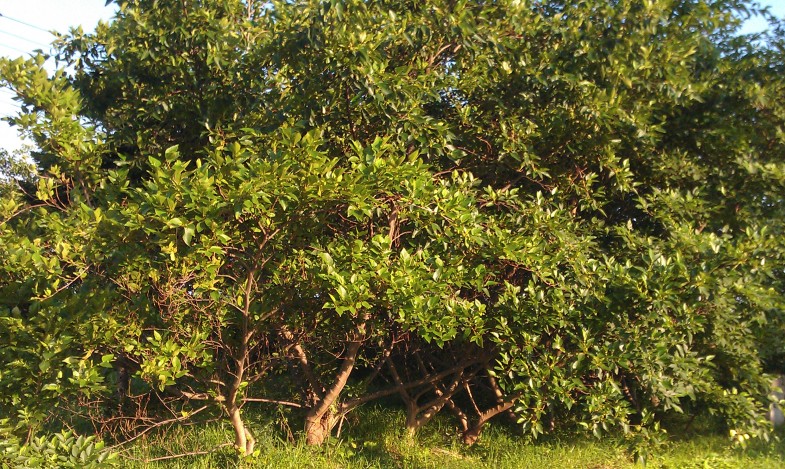
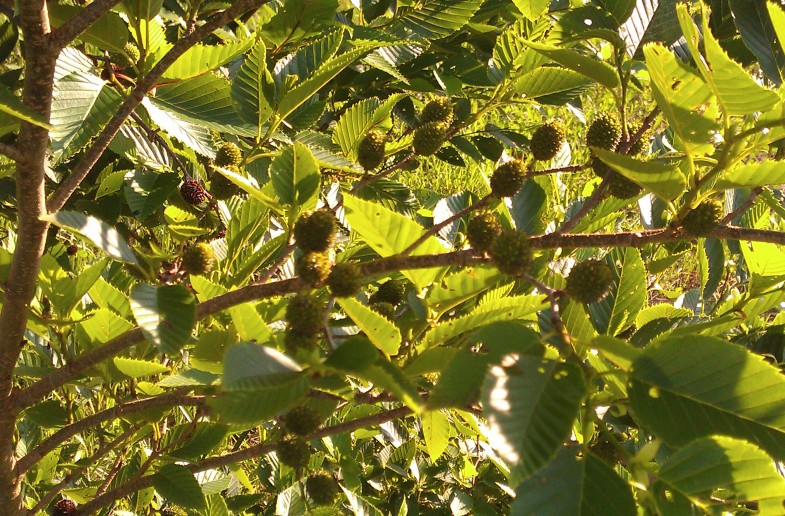
La palmera es un árbol fuerte que puede crecer en cualquier terreno baldío.。El crecimiento de este árbol estabiliza el suelo.、puede dar el siguiente paso。La palmera se dobla bruscamente.、No es lo suficientemente fuerte como material de construcción.、No sólo no sirve de nada、A los lugareños no les gusta el árbol porque obstruye el desarrollo.。pero、Si lo piensas detenidamente, se podría decir que Yashabushi es un líder que ataca el páramo.。En cierto sentido, el árbol es una piedra que queda para la próxima generación.。Si lo comparamos con los humanos、Es un gran tipo que no se puede comparar conmigo.、También es un árbol que evoca una sensación de asombro en mi corazón.。
“Yashabushi” is very strong trees lived in all kind of the wasteland. The soil of damp ground is stabilised by this tree that live in. That wasteland will be good condition for people’s usu. However this tree itself is not only completely usufull at timber, but it also interrut grow other plant’s up. So it has been hatred by local people. Howevew, from the other point of view, Yashabushi is like a pioneer of opening bushes. So I feel like to respect it.