下北の自然-3 / Wild life Shimokita-3

早春の流れ昆布を拾う/Gathering kelp

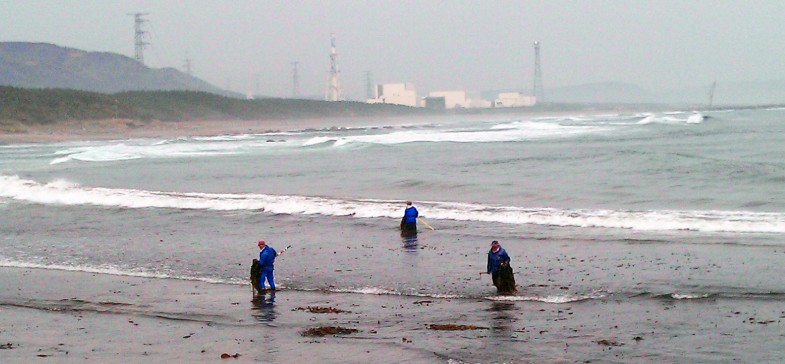
Kelp biltzeko paisaia。Kelp hondartzan ia egunero garbitzen da udaberri hasieratik udazkenera arte (uste dut neguan ere garbitzen dela).、Ziurrenik ez dago inor jasotzeko.)。Egun batzuk egun hau bezalakoak dira.、Are egun gehiago、Gutxiago dauden egunak izango dira。Botatzen den lekua ere olatuen araberakoa da.。Alga flotatzen ari zarela esaten baduzu ere,、Egia esan, hau dirua da。Gainera, batzuek inoiz barregarria ez den kopuru bat ``jasotzen dute''.。Landan luxurik ez baduzu、Pertsona batzuk honetaz bakarrik bizi daitezkeela esaten da.。Atzeko eraikin zuria Tohoku Electric Power-en Higashidori Zentral Nuklearra da.。

This is a distant view of gathering kelp(Kommbu). In Shimokita, it is familiar during from early spring to lately autum. May be in winter also, but nobody would do it. For the people living at seaside, Gathering kelp isn’t so cheaply way for thier famiries to live. It could be good income for tthem. As long as didn’t wast , you could keep average life there, as I’ve heard. White building in distance is Higashi-do-ri nuclear power plant.

Alga flotagarria modu irregularrean urratuta dago.、Zaila da arrazoizko prezioan saltzea。lehorra、Moztu itxura ona ez duten zatiak、Egin zati onekin bakarrik sorta labur bat。Ahalegin hori piezak jasotzea baino askoz zailagoa da.。Badira egunak pieza bakar bat ere jaso ezin dudana.、Asko jaso dezakezunean、Diru sarrera harrigarri ona dela dirudi.。Gainera (eta hau garrantzitsua da), giza harremanen estresetik libre dago.、Naturarekin lan osasuntsua da.。Baina lanaren erdia zorteari geratzen zaio。hiriko pertsona、Orduko eraginkortasunaren ikuspuntutik, zalantzan dago lana ere deitu daitekeen.。Agian hori da itsasertzean bizitzeak esan nahi duena.。

Drifting kelp had br0ken off , so you can’t sell for normal price as it is. So you have to cut off any parts of bad lookings, and then after dry it, get to some short bundles etc. It must takes time more than gathering kelp itself. Although it is natural and healthy job without troublesome human relations. It may be inportant thing, may not be ? On the other hand, they say that the job trust on providence in a half. It is suspected that is real buisines or not from the viewpoint of city-dweller. That’s all might is the life in seaside. 2012-5-11
下北の自然-2 / Wild life in Shimokita-2

ニリンソウとトリカブト

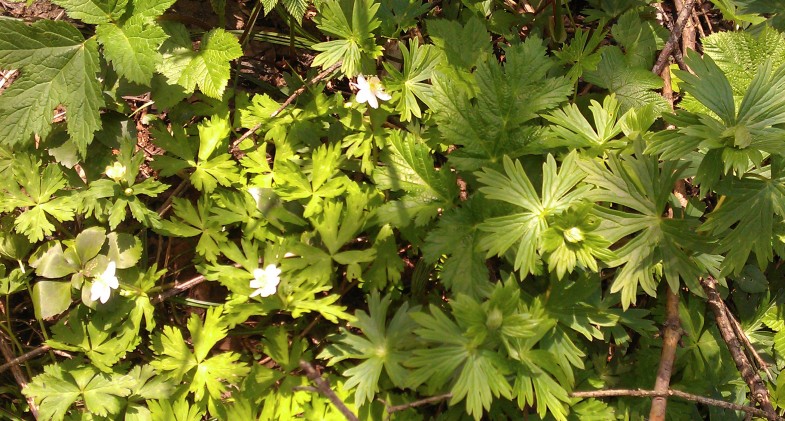
Argazkia maiatzaren 1ean ateratako sardinzar eta akonito baten bi plano bat da.。Baina、Oso pieza beldurgarria ere bada.。Nirinsou jan dezakezu, baina、Hau da, akonitoa pozoi hilgarriaren sinonimo dela esan daitekeen landare bat delako.。

Windflower (left. with little white flower. It is called “Nirin-so” in Japan ) and Aconitum (right. monkshood. It is called “Tori-kabuto” also) are in this picture was taken on May 1th 2012 in Shimokita. “Nirin” means two flowers directly. “so” means weed. “Tori” is a bird . “kabuto” means japanese traditional hat. Both have similar leaves but actually they have opposit charactor in a sense. “Nirin-so” is edible. The other is very famous for its deadly poison.

zuria ezkerrean、Lore polita Nirinsou da。Eskuineko koska apur bat sakona da.、Akonitoa kolore ilunagoa da.。Antzekoak direla esaten baduzu, antzekoak dira.。Hau naturala izan daiteke biak Ranunculaceae familiakoak baitira.。Honela ere hazten dira toki berean。Akonitoa jada altuagoa izaten hasi da.、Nirinsou loreak loratu baino astebete lehenago、Antzekoagoa izan behar zuen。

Both of them are belong to a family of Ranunculaceae, so they are grown in the same place like this. Aconitums (monkshood) are taller than before, although I’m sure they both must be take after each more at one week ago.

Urtero akonito pozoia dela eta、Japonian ere hainbat pertsona hiltzen dira.。Udaberriaren hasieran Nirinsourekin、Uda hasieran, askotan Shidokei barazki basatiarekin nahasten da.。Biak ala biak、Beharrezkoa da gauzak ondo eta osoki memorizatzea segurtasunerako.。Akonitoa ere lore bat da、Polenerako ere bai、eztia ere pozoitsua da。Ez dago antidotorik。Erlezain zaletuek kontuz ibili behar dute。

Some people will be die from poison of Aconitum every year in Japan. It has poison in not only flowers, pollens but also honey ! If you’d like to go into wild feeld and to take wild vegetables, you should better to get correct information.

Shimokita basalandareen eta basalandareen altxorra da.。Natura hondatugabea hor dago。errepidea oso erosoa da。Udan, Shimokitako tenperatura 20 eta 25 gradu ingurukoa da.。Ez da hozkailurik behar。hotzago samarra。Ibili mendi eta zelai freskagarrietatik、Ez da txarra akonito lore urdin ilunen multzo handiak ikustea.。

Shimokita peninsula is like a paradise for wild flowers and wild vegetables. The weather will be good for driving, trekking etc in summer time. Enjoy for seeing big colonies filled up with deep blue flowers of Aconitums. 2012/5/2

下北の自然 / Wild life in Shimokita


Skunk aza da、Shimokita penintsula irudikatzen duen ``belarretako'' bat da.。Skunk azaz hitz egitean, berehala lotzen du Ozerekin.、Seguru nago jende askok uste duela landare alpino bat dela.。Shimokitan, itsas mailatik 0 m-tik aurrera、Edozein lekutan hazi daiteke ura dagoen bitartean、Belar "itxuragabe" samarra da.。

Skunk cabbage are one of representable weeds in Shimokita peninsula. Most people will associated them with alpine plants in Oze. They are grown everywhere wet over sea level.

Begiragarria dela esan arren、Ez da gorroto dudala berez mofetaren aza.。Hazten den lekua Yaji da.、Hau da, horrek adierazten du hezeguneak ezin direla inongo helburuetarako erabili.。Zer esan nahi du leku guztietan ikusteak?、Imajina dezakezun bezala。

Skunk cabbage are by no means welcomed here as the place living them means useless land called “yachi” or “yaji”. In Shimokita peninsula, there are a lot of white flowers all over the place.

2012/5/1