下北の自然-3 / Wild life Shimokita-3

早春の流れ昆布を拾う/Gathering kelp

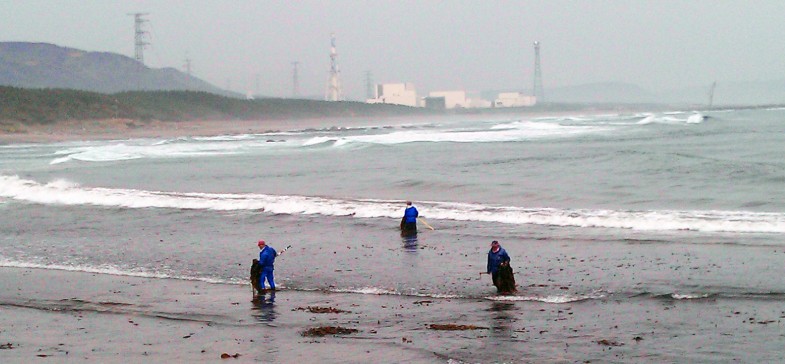
昆布拾いの風景昆布は早春から秋まで毎日のように浜辺に流れ着く(冬もたぶん流れ着いているのだと思うがきっと拾う人がいないのだろう)この日のようにまあまあの日もあればもっと多い日も少ない日もあるだろう打ち上げられる場所も波まかせだ流れ昆布を拾うと言っても実はこれはお金になるのであるしかも決して馬鹿にならない金額を「拾い上げる」人もいる田舎では贅沢さえしなければこれだけで生活できる人もいるという背景の白い建物は東北電力・東通原子力発電所

This is a distant view of gathering kelp(Kommbu). In Shimokita, it is familiar during from early spring to lately autum. May be in winter also, but nobody would do it. For the people living at seaside, Gathering kelp isn’t so cheaply way for thier famiries to live. It could be good income for tthem. As long as didn’t wast , you could keep average life there, as I’ve heard. White building in distance is Higashi-do-ri nuclear power plant.

流れ昆布は変則的にちぎれたりしてそのままではまともな値段では売りにくい乾燥し見栄えの悪い部分を切り取っていい部分だけの短い束をこしらえるその手間が拾うよりずっと大変だ一枚も拾えない日もあるが大量に拾える時は案外割の良い収入になるらしいしかも(これこそが重要だが)人間関係のストレスとは無縁の自然相手の健康的な仕事であるしかし仕事の半分は運まかせ都会人の時間単位の効率主義から見れば仕事と言えるかどうかさえ微妙なところだこれが海辺で生きるということの意味なのかも知れない

Drifting kelp had br0ken off , so you can’t sell for normal price as it is. So you have to cut off any parts of bad lookings, and then after dry it, get to some short bundles etc. It must takes time more than gathering kelp itself. Although it is natural and healthy job without troublesome human relations. It may be inportant thing, may not be ? On the other hand, they say that the job trust on providence in a half. It is suspected that is real buisines or not from the viewpoint of city-dweller. That’s all might is the life in seaside. 2012-5-11
下北の自然-2 / Wild life in Shimokita-2

ニリンソウとトリカブト

Die foto is 'n twee-skoot van 'n haring en akoniet wat op 1 Mei geneem is.。Egter、Dit is ook 'n baie skrikwekkende stuk.。Jy kan Nirinsou eet, maar、Dit is omdat akoniet 'n plant is wat gesê kan word dat dit hoogs giftig is.。

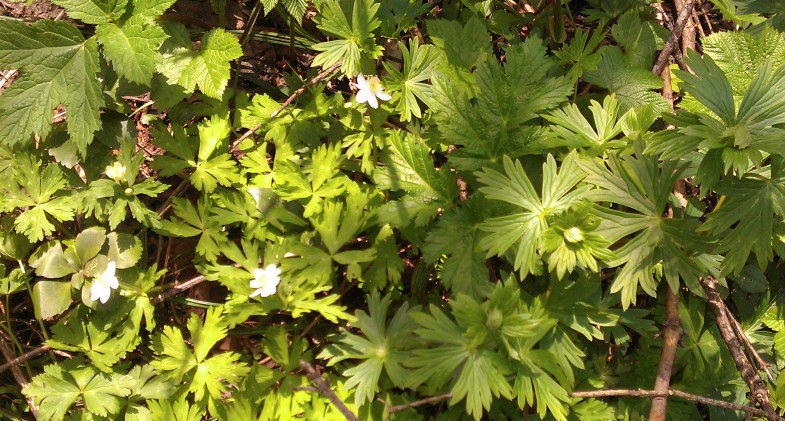
Windflower (left. with little white flower. It is called “Nirin-so” in Japan ) and Aconitum (right. monkshood. It is called “Tori-kabuto” also) are in this picture was taken on May 1th 2012 in Shimokita. “Nirin” means two flowers directly. “so” means weed. “Tori” is a bird . “kabuto” means japanese traditional hat. Both have similar leaves but actually they have opposit charactor in a sense. “Nirin-so” is edible. The other is very famous for its deadly poison.

wit aan die linkerkant、Die oulike blom is Nirinsou。Die kerf aan die regterkant is effens diep.、Aconite is 'n bietjie donkerder van kleur.。As jy sê hulle is soortgelyk, is hulle soortgelyk.。Dit kan natuurlik wees aangesien hulle albei aan die Ranunculaceae-familie behoort.。Hulle groei ook op dieselfde plek soos hierdie。Die akoniet begin al langer groei.、Een week voor die blomme van Nirinsou blom、Dit moes meer soortgelyk gewees het。

Both of them are belong to a family of Ranunculaceae, so they are grown in the same place like this. Aconitums (monkshood) are taller than before, although I’m sure they both must be take after each more at one week ago.

Elke jaar as gevolg van akonietgif、Verskeie mense sterf ook in Japan.。Vroeë lente met Nirinsou、In die vroeë somer word dit dikwels verwar met die wilde groente Shidokei.。Een van die twee、Dit is nodig om dinge deeglik en omvattend te memoriseer vir veiligheid.。Akoniet is ook 'n blom、Ook vir stuifmeel、heuning is ook giftig。Daar is geen teenmiddel nie。Stokperdbyeboere moet versigtig wees。

Some people will be die from poison of Aconitum every year in Japan. It has poison in not only flowers, pollens but also honey ! If you’d like to go into wild feeld and to take wild vegetables, you should better to get correct information.

Shimokita is 'n skatkis van wilde plante en wilde plante.。Ongerepte natuur is daar。die pad is uiters gemaklik。In die somer is die temperatuur in Shimokita ongeveer 20 tot 25 grade.。Nie nodig vir 'n koeler nie。eerder kouer。Stap deur die verfrissende berge en velde、Dit is nie sleg om groot trosse donkerblou blomme van akoniet te sien nie.。

Shimokita peninsula is like a paradise for wild flowers and wild vegetables. The weather will be good for driving, trekking etc in summer time. Enjoy for seeing big colonies filled up with deep blue flowers of Aconitums. 2012/5/2

下北の自然 / Wild life in Shimokita


水芭蕉は下北半島を代表する「雑草」のひとつである水芭蕉と言えばすぐ尾瀬と連想するように高山植物と思っている人も多いに違いない下北では海抜0mから水さえあればどこにでも生えるやや「目障りな」雑草だ

Skunk cabbage are one of representable weeds in Shimokita peninsula. Most people will associated them with alpine plants in Oze. They are grown everywhere wet over sea level.

「目障り」と言っても水芭蕉それ自体を嫌っているというわけではないそれが生えている場所がヤチ(ヤヂ)すなわち何の用途にも使えない湿地だということを示しているからだ至る所でそれが見られるということが何を意味するかはご想像の通りである

Skunk cabbage are by no means welcomed here as the place living them means useless land called “yachi” or “yaji”. In Shimokita peninsula, there are a lot of white flowers all over the place.

2012/5/1